
Understanding Shipment Volume
How Big Is 200 Cubic Feet?
Think roughly 40–50 moving boxes containing clothing, books, kitchenware and personal belongings—not a furnished apartment.
A common starting size
A personal shipment—not a whole household
Two hundred cubic feet is a common minimum for a professionally packed partial shipment. Your belongings share container space with other Aliyah Lift customers, so you pay for the volume your shipment occupies.
- Often suitable for one person or a young couple
- Best when shipping primarily boxes and personal effects
- May include a few small pieces, but not a room full of furniture
Sample inventory
What might fit into 200 cubic feet?
Every shipment is different, but this example helps make the number more tangible.
3Wardrobe boxes
6 feet of closet-hung clothing
Typical box: 24 × 21 × 48 inches; 14 cubic feet.
Hanging space: Each box has a 24-inch wardrobe bar.
Sample contents: 30–45 dresses, suits, jackets, shirts and skirts, depending on garment thickness.
10Book boxes
200–300 books and files
Typical box: 16 × 13 × 13 inches; 1.5 cubic feet.
Why smaller: Books and files become extremely heavy in larger cartons.
Sample contents: Books, photo albums, binders, documents and office files.
5Dish-pack boxes
6–8 kitchen cabinets
Typical box: 18 × 18 × 28 inches; 5.25 cubic feet.
Extra protection: The double-wall carton allows space for wrapping paper and dividers.
Sample contents: Dishes, glasses, cookware, serving pieces and other kitchenware.
18Medium boxes
Two dressers and several cabinets
Typical box: 18 × 18 × 16 inches; 3 cubic feet.
Best used for: Everyday belongings that are not unusually heavy or bulky.
Sample contents: Folded clothing, shoes, toiletries, small appliances and personal belongings.
2Linen wardrobe boxes
10–14 bulky bedding pieces
Typical box: 24 × 21 × 48 inches; 14 cubic feet.
Why wardrobe boxes: Their height makes them useful for lightweight, bulky household goods.
Sample contents: Pillows, blankets, comforters, sheets, towels and other linens.
7Picture and keepsake boxes
Framed items and one storage closet
Typical mix: 2 adjustable picture boxes and 5 medium boxes.
Picture boxes: Sized to fit the artwork; dimensions depend on the framed items being packed.
Sample contents: 8–12 framed pictures, mirrors or diplomas, plus toys, holiday decorations, keepsakes and hobby supplies.
The finished shipment
Volume is measured after professional packing
Your estimate begins with the items you plan to ship. The final volume is based on the outside dimensions after the goods have been professionally packed and prepared for shipping.
Boxes may be stacked on pallets or packed into wooden lift vans for protection and handling. The protective packing becomes part of the shipment’s measured volume.
One useful comparison
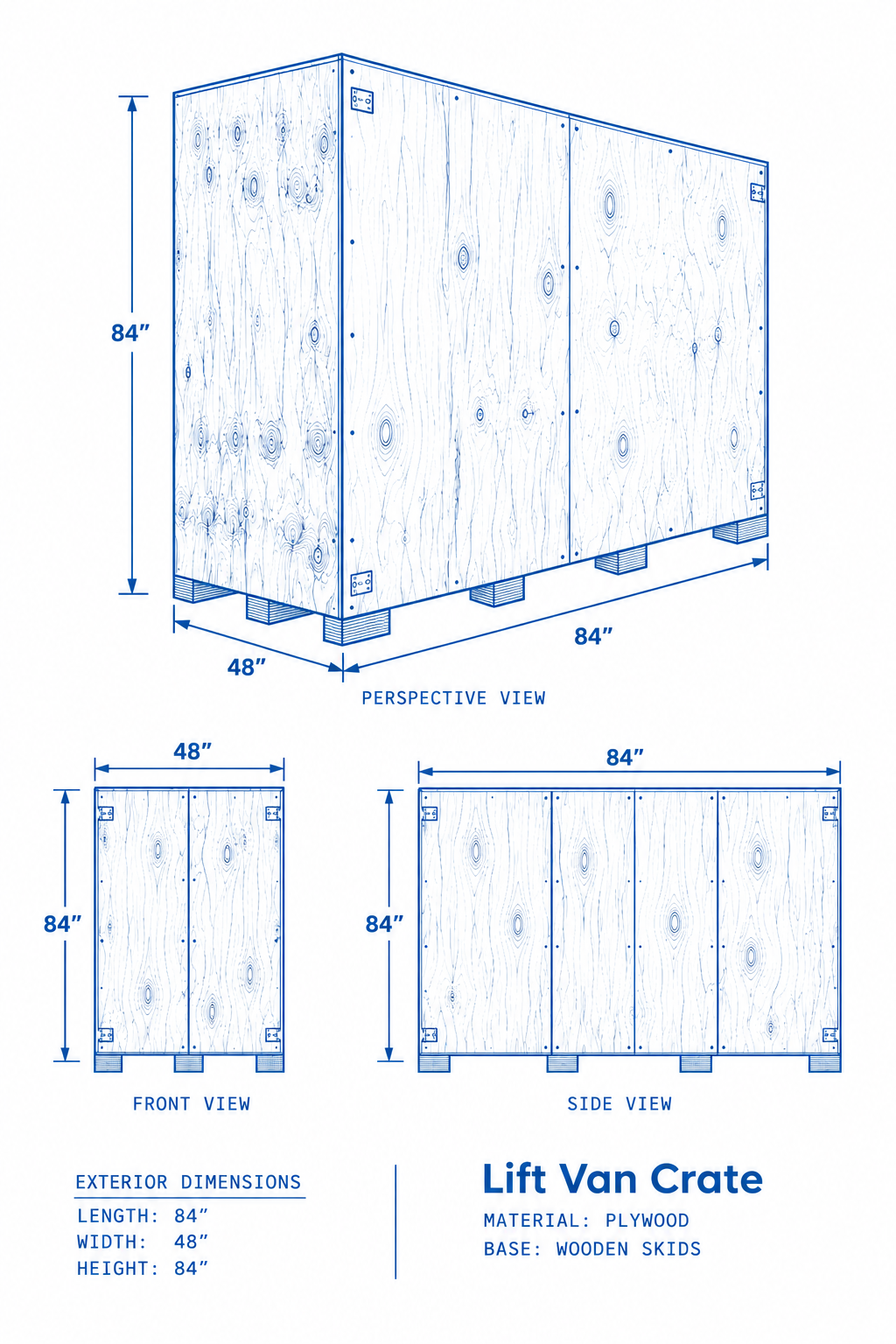
About the size of one lift van
A lift van is a large wooden shipping crate commonly used for household goods. A typical outside measurement is approximately four feet wide, seven feet long and seven feet high.
This comparison is meant to help you picture the space. The exact capacity depends on the crate, the items and how efficiently everything can be packed.
Approximate outside dimensions
That equals 196 cubic feet—close enough to visualize a 200-cubic-foot shipment.
Questions people ask
200-cubic-foot shipment FAQ
Can I ship less than 200 cubic feet?
Yes. Smaller shipments may fit our Super Small Shipment or Aliyah Air Freight service. The best option depends on the amount, type of belongings and how quickly you need them.
Can 200 cubic feet include furniture?
It can include a few carefully selected small pieces, but 200 cubic feet is generally best for boxes and personal belongings. Larger furniture can consume the available space very quickly.
Is 200 cubic feet always 40–50 boxes?
No. That is only a practical visualization. Wardrobe boxes, dish packs and book boxes have different sizes, so the actual number varies.
When is the final volume determined?
The final volume is normally confirmed after your belongings have been professionally packed and prepared for international shipping.
How long does a partial shipment take?
A partial shipment commonly takes about 10–14 weeks door to door, although consolidation schedules, the sailing route, customs and seasonal conditions can affect timing.
What if my shipment is larger than 200 cubic feet?
That is completely normal. Partial shipments can accommodate considerably more volume. Your final charge is based on the terms in your proposal and the shipment’s confirmed packed volume.
Still not sure how much you have?
Use our calculator for a quick estimate, or tell us what you plan to ship and we’ll help you choose the right service.